
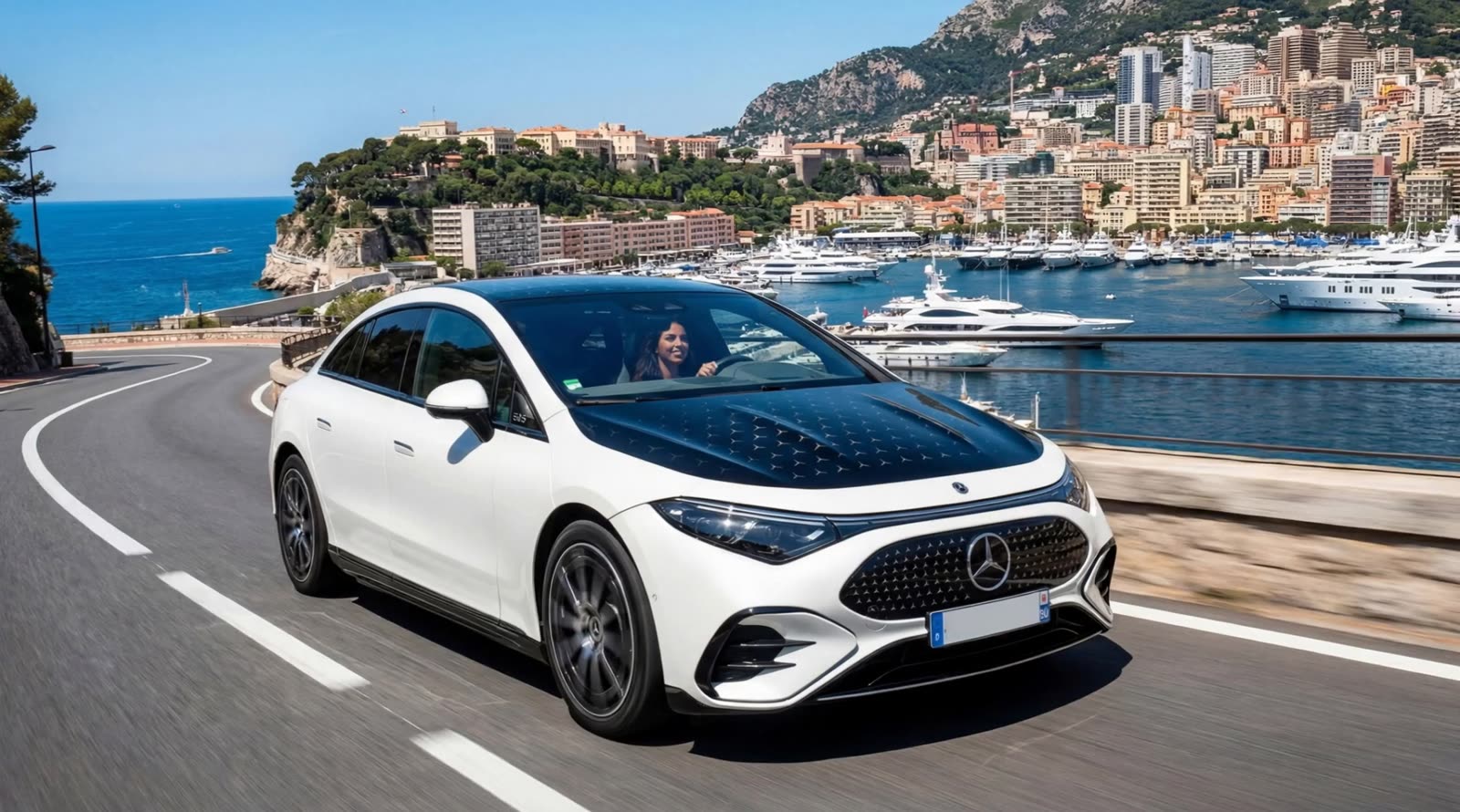

Structural VIPVPath to mass production
A development and industrialisation proposal for Mercedes-Benz
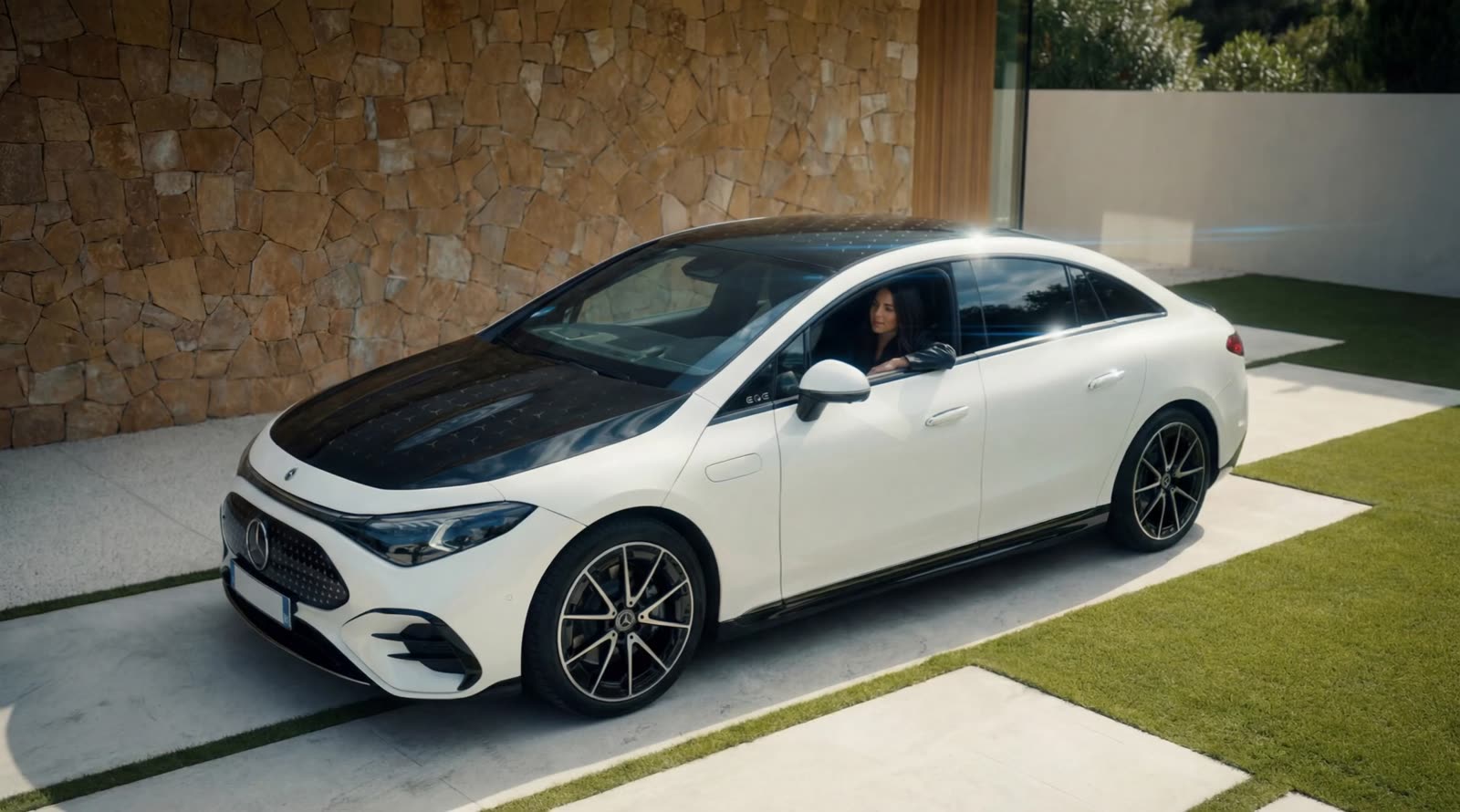
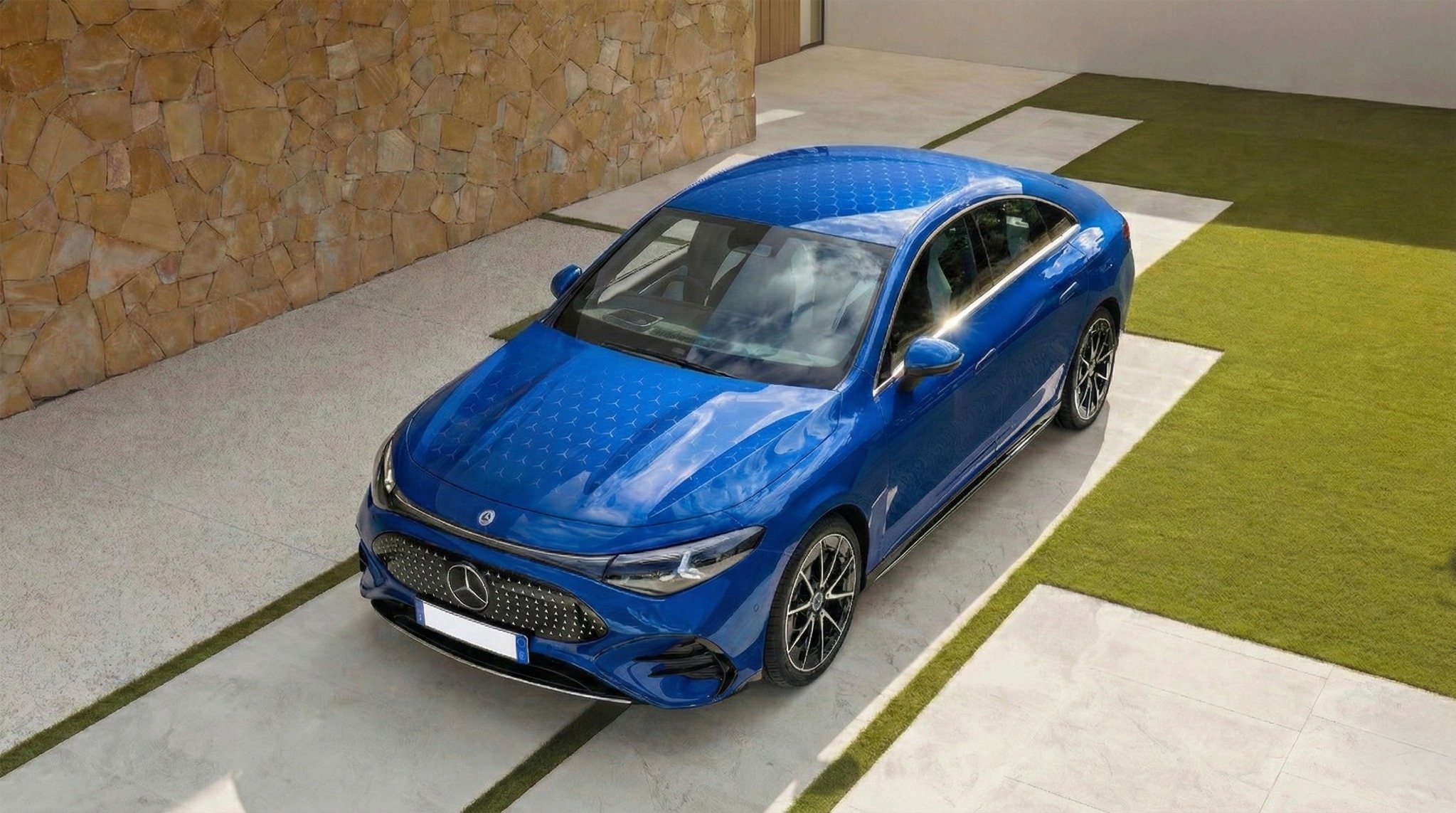
Concept visualisation — not an announced product
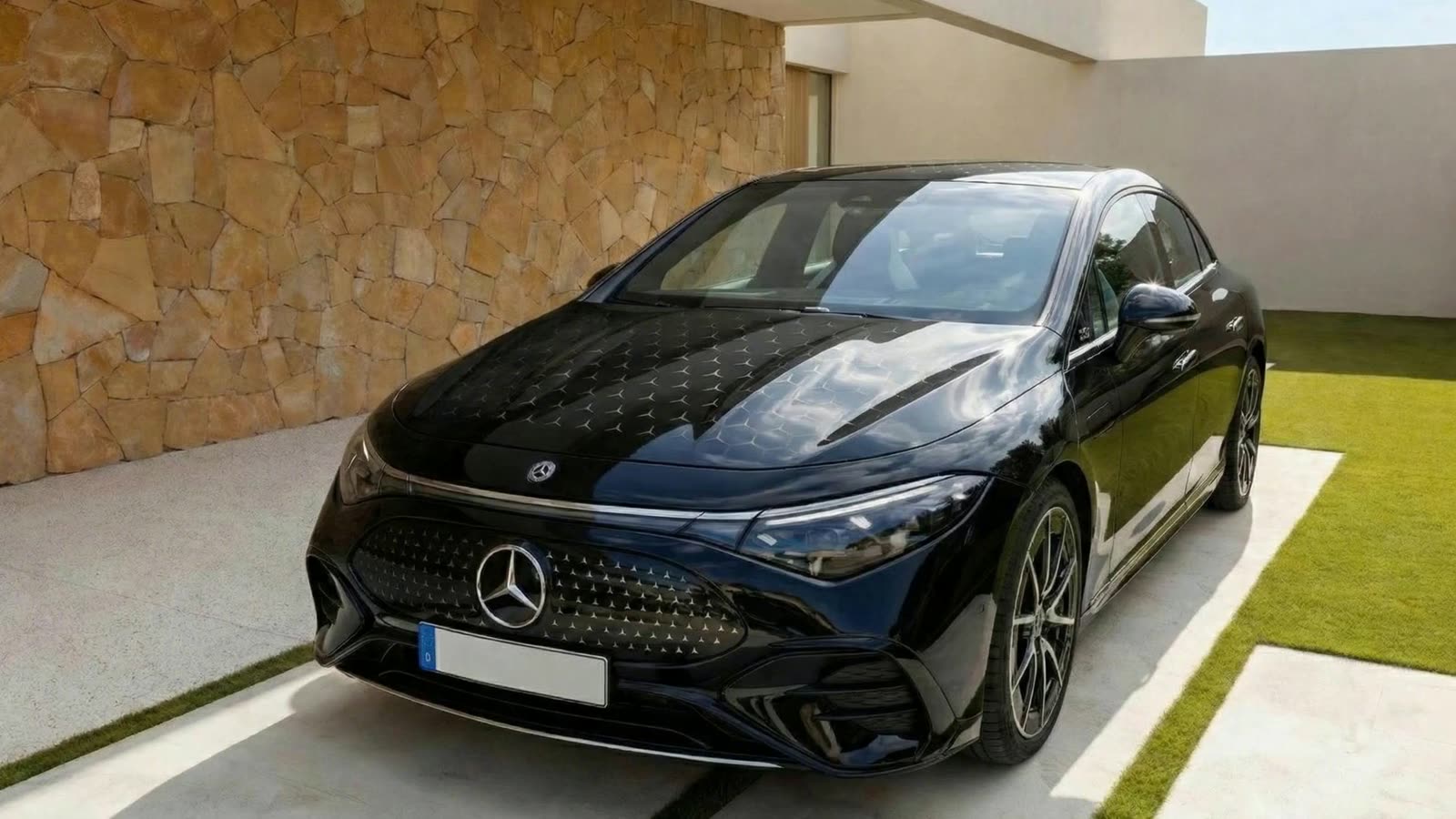
The integration opportunity
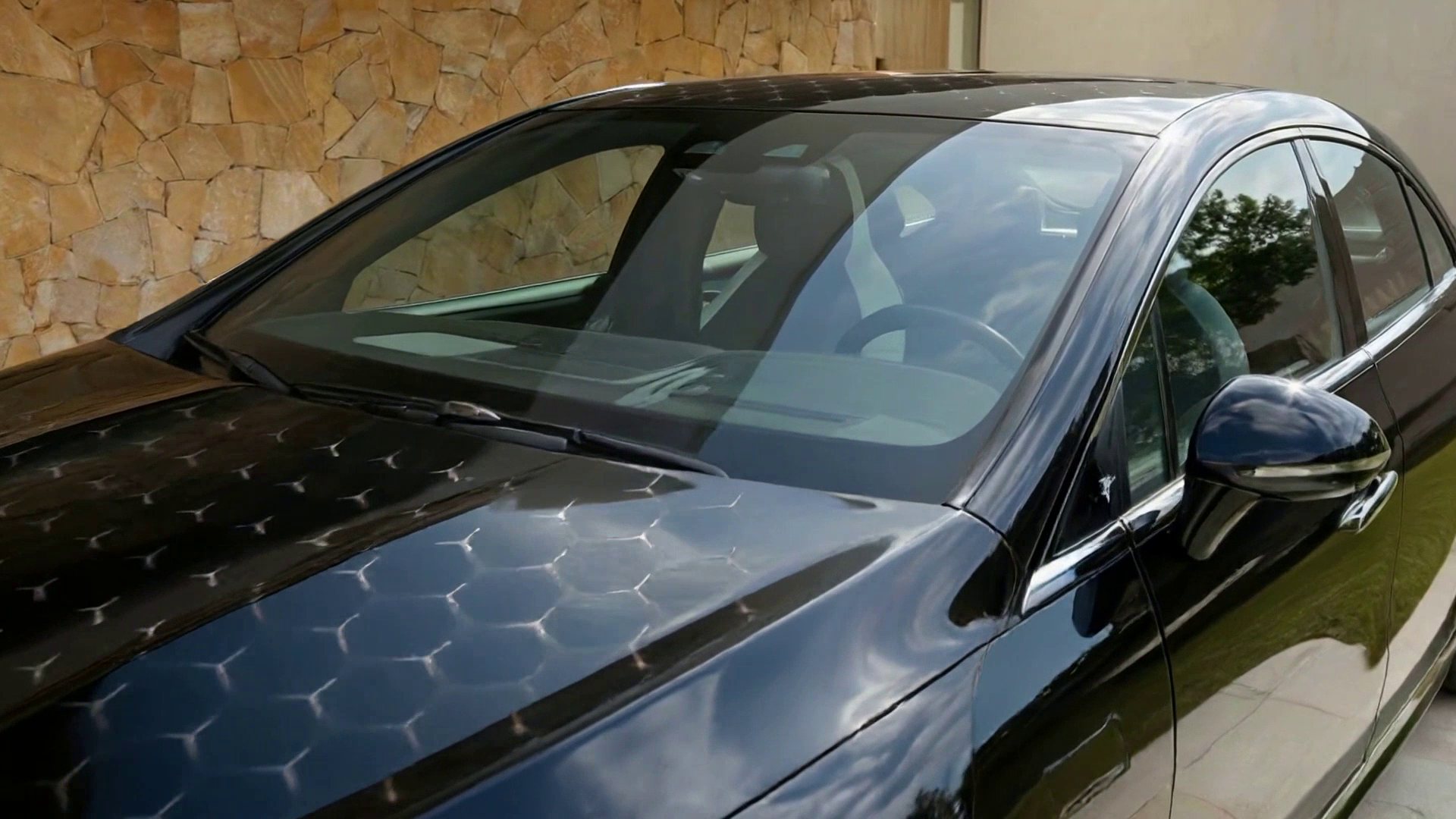
Energy-active body panels that keep the automotive finish.
Savcor proposes to take structural vehicle-integrated photovoltaics from prototype to production: solar cells laminated inside load-bearing hood and tailgate structures, under a coloured, coated polymer surface, so the PV layer recedes into the painted body.
- Structure
The panel is the part — not an add-on module
- Surface
Colour and finish developed with Mercedes-Benz Design
- Production
Process and pilot line designed for series volumes
Concept visualisation
The proposal at a glance
Five workstreams to reach series production.
Development, testing and industrialisation run in parallel across 2027 and 2028.
Total budget requirement · estimate
€6,678,000
Roadmap: 24 months total calendar time to mass production (source plan). Qualification milestones are shown separately in the roadmap.
- 01TRL 6 → 8€910,000
Hood
Development to production geometry, testing programme
- 02TRL 5 → 8€830,000
Tailgate
Parallel development with the hood, testing programme
- 03TRL 3 → 7€174,000
Interior roller blind
PV surface only · Level 1 prototype · draft
- 042027€264,000
Appearance & colour development
CFM with the Mercedes-Benz design team
- 0518 months€4,500,000
Industrialisation, hood & tailgate
Pilot factory, 20,000 units/a · proposed contribution
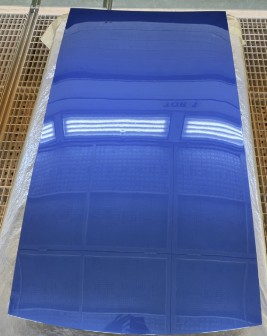
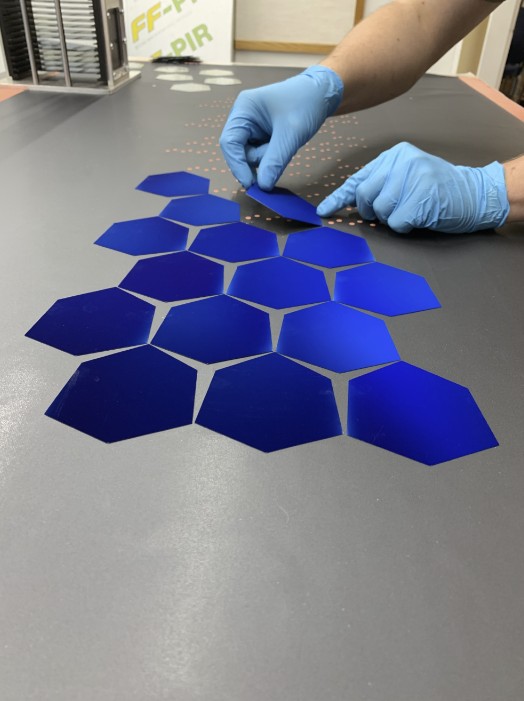
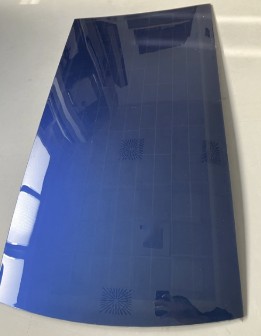
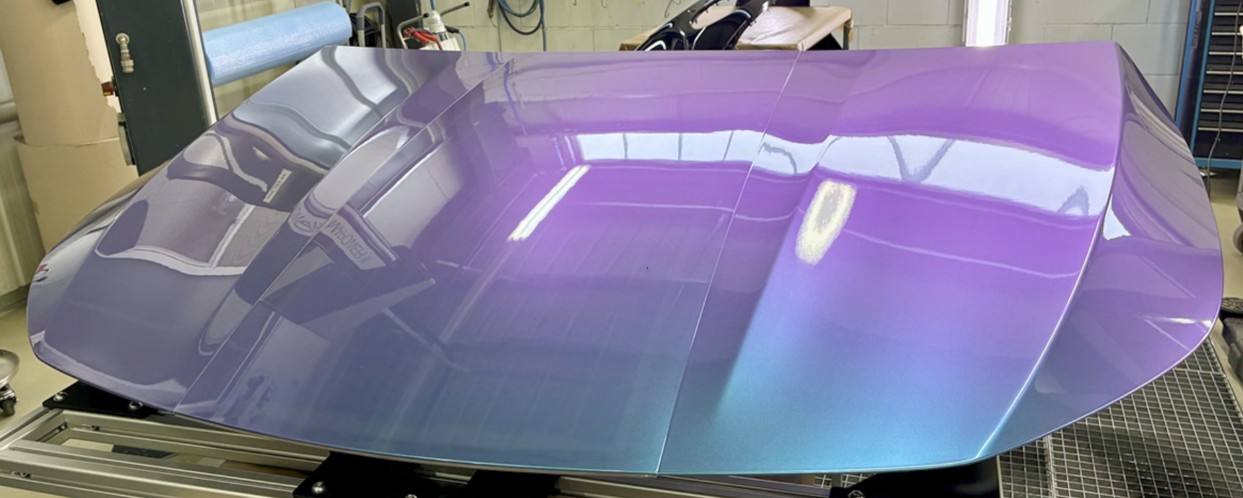
Actual prototype photographs
Built, not rendered.
Structural PV parts have been produced in hood-scale geometry. The photographs show the current state of the work, unretouched — finish and colour are still in development.
- HoodCurrent status TRL 6
- TailgateCurrent status TRL 5
- Interior roller blindCurrent status TRL 3
Structural layer architecture
One laminated structure, six functional layers.
Savcor's proposal for hood and tailgate: the solar pre-laminate is encapsulated between a coloured polymer skin and a thermoformable sandwich structure that carries the mounting points.
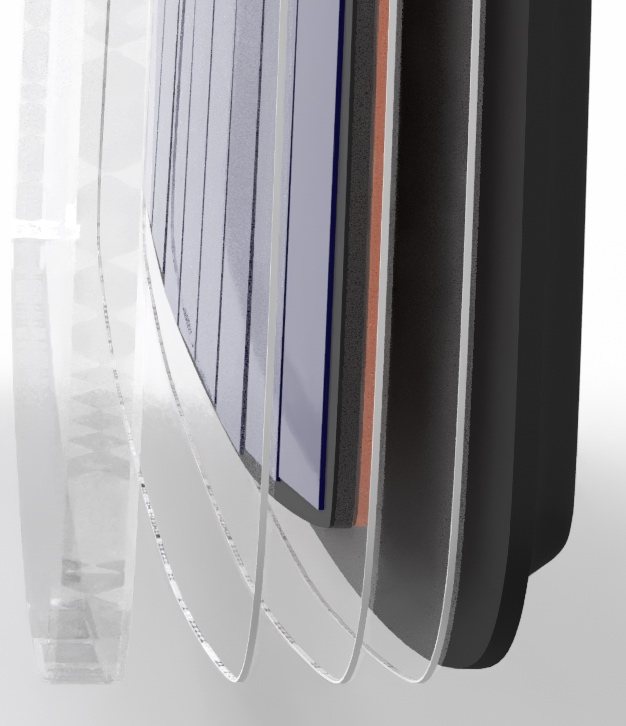
Layer concept render, Savcor. Diagram is schematic — layer thicknesses and materials are not to scale or specified.
- 01
Top layer
Thermoformed or moulded polymer · coated to improve durability · coloured
- 02
Encapsulant layer
- 03
Solar pre-laminate with IBC cells
Interdigitated back-contact cells
- 04
Encapsulant layer
- 05
Bottom layer — sandwich construction
Thermoformable, closed edges · inserts / screw mounts for additional components (hinges, latches, etc.)
- 06
Inner liner
Aesthetics, sound, fit, barrier and other functions
Mass production flow · with honeycomb and thermoforming
Three component streams, one 3D lamination.
Front plate, solar pre-laminate and rear plate are prepared in parallel, laminated on tool, then finished, painted and assembled into a complete part.
Stage 4
Front plate preprocess
Screen printing / laser cutting
Stage 5
Front plate forming
Thermoforming
Stage 1
Solar pre-laminate
Pick & place → lamination
Stage 2
Rear plate preprocess
Milling & friction welding
Stage 3
Rear plate forming
Compression moulding
Stage 6
3D laminating
Evacuation lamination on tool, crosslinking in autoclave
Stage 7
Post-processing
Trimming, contacts, junction boxes, testing
Stage 8
Painting
Spray painting
Stage 9
Assembly
Seals, latches, mounting components
Process stages 1–5 · component streams
Preparing the three inputs.
| No. | Stage | Process | Input | Output | Quality control |
|---|---|---|---|---|---|
| 01 | Solar pre-laminate | Pick & place → lamination | Cells · encapsulation · CBS (conductive back sheet) | Solar pre-laminate | VisualDimensionsELIV |
| 02 | Rear plate preprocess | Milling & friction welding | 2D honeycomb | Rear plate with inserts and cutouts | VisualDimensionsBond strength |
| 03 | Rear plate forming | Compression moulding | 2D honeycombInput as stated; sequence with stage 02 to be confirmed | 3D rear plate | VisualDimensions |
| 04 | Front plate preprocess | Screen printing / laser cutting | Extruded PC | 2D pre-form part | VisualDimensionsBond strength |
| 05 | Front plate forming | Thermoforming | 2D pre-form part | 3D front plate | VisualDimensions |
EL = electroluminescence imaging · IV = current–voltage measurement · CBS = conductive back sheet
Process stages 6–9 · integration and finishing
From laminate to complete part.
| No. | Stage | Process | Input | Output | Quality control |
|---|---|---|---|---|---|
| 06 | 3D laminating | Evacuation lamination on tool and crosslinking in autoclave | 3D front plate · solar pre-laminate · encapsulation · 3D rear plate | 3D solar laminate | VisualDimensions |
| 07 | Post-processing | Trimming, opening contacts, mounting and connecting junction boxes, testing | 3D laminate · connectors | 3D solar part | VisualIVEL |
| 08 | Painting | Spray painting | 3D solar part · paint with effect pigments | Colour 3D solar part | Visual |
| 09 | Assembly | Assembly | 3D solar part · mounting components · seals, latches, etc. | Solar part complete | VisualDimensionsFunctionality |
Quality-control points as stated in the process plan; a stage-by-stage QC matrix is included in the appendix.
Manufacturing geography · planning assumption
Built in Stuttgart, on a German supply base.
The working assumption places manufacturing in Stuttgart, with the Savcor solar pre-laminate supplied from Finland and all other inputs sourced in Germany.
- Manufacturing locationStuttgart, DE
- Savcor pre-laminateFinland
- Front and rear platesGermany
- Encapsulation foilsGermany
- Paints and printsGermany
- ConnectorsGermany
- Inserts and edge finishGermany
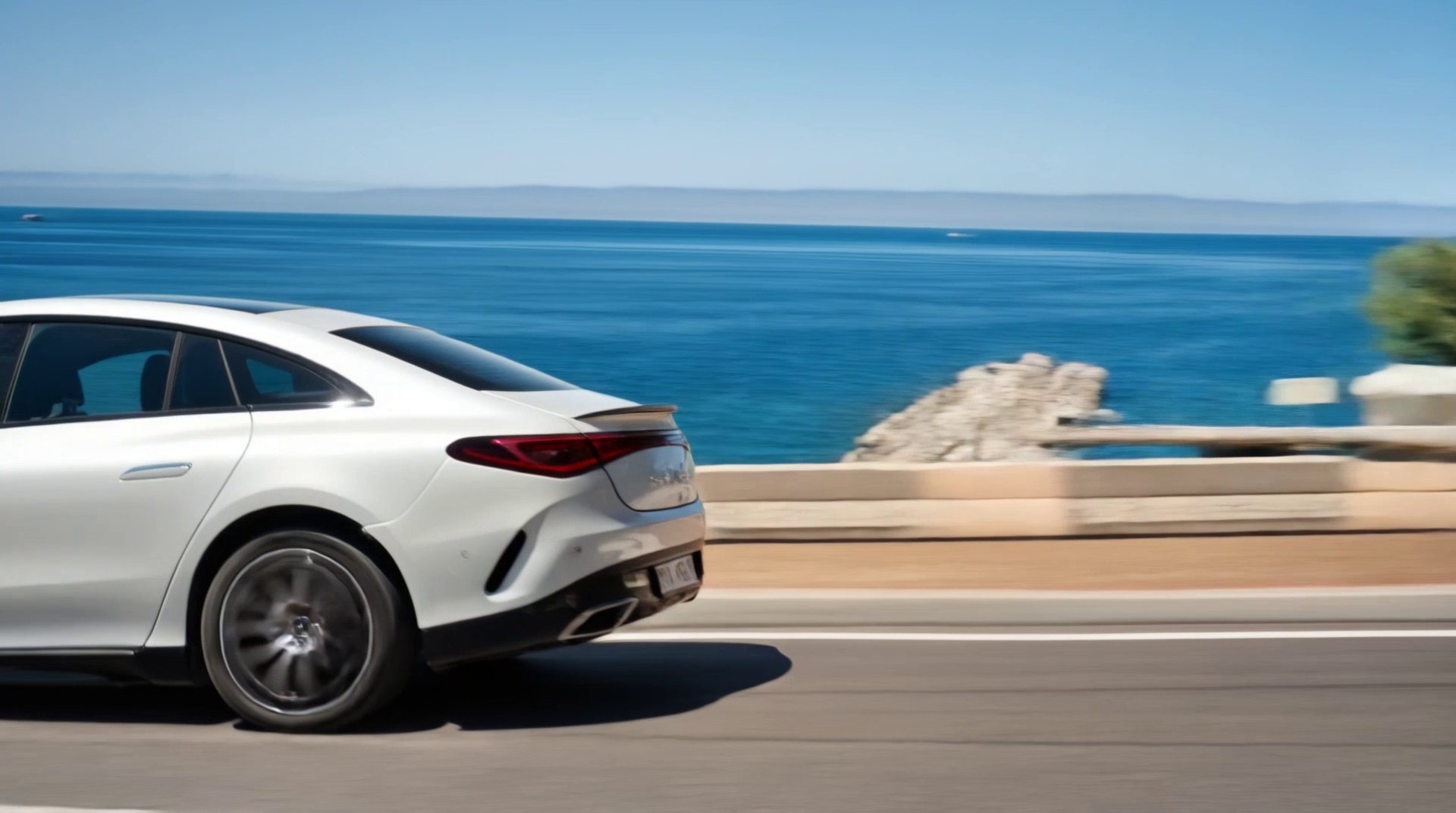
01 · HOOD
Hood
The most mature application: technology demonstrated in a relevant environment with the prototype.
TRL 6
Current status
TRL 7
System prototype demonstration in operational environment — with 10 months development
TRL 8
System complete and qualified — within 18 months
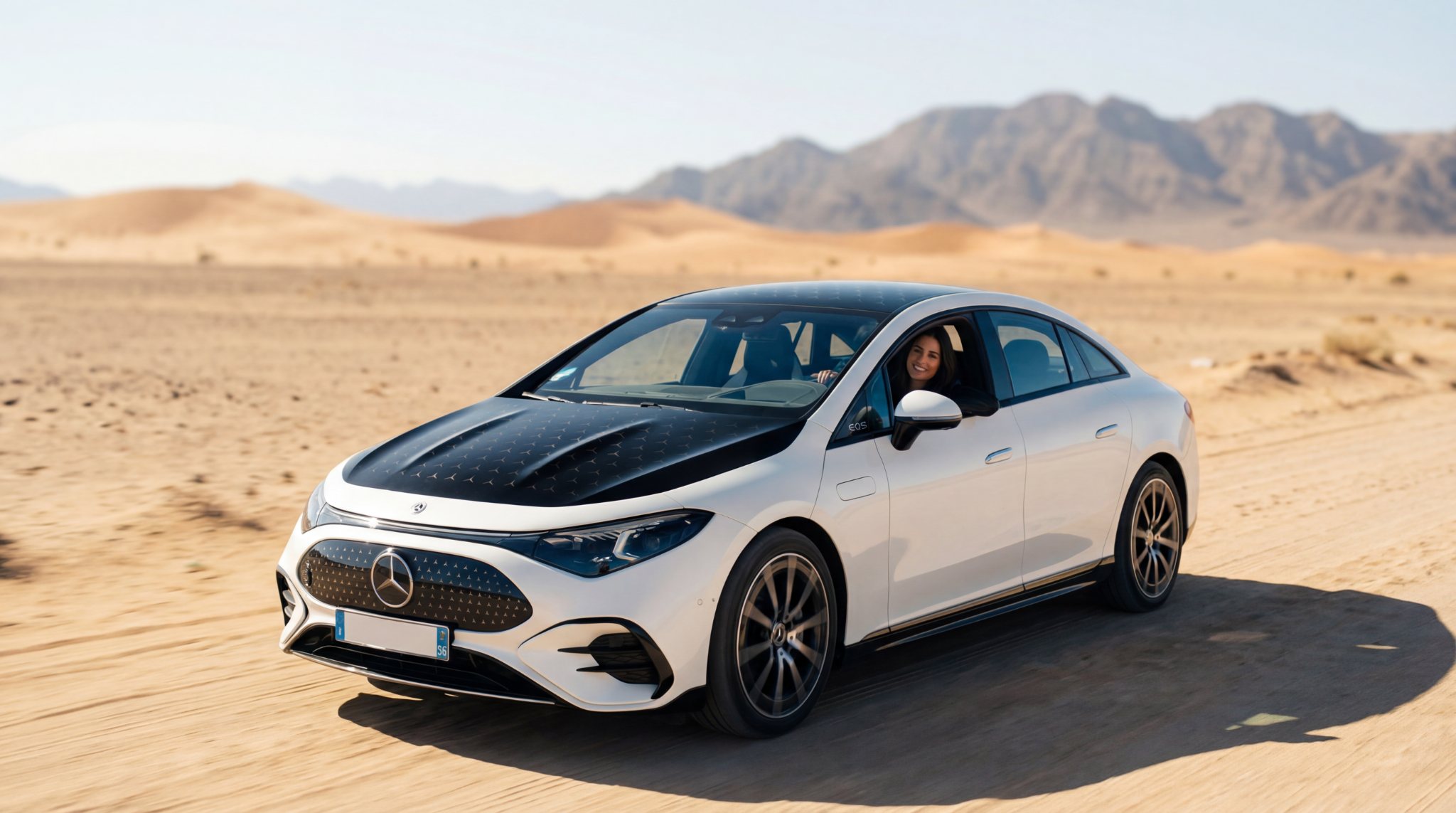
Concept visualisation
Hood · development proposal
One production-geometry hood, tested in parallel.
Development and the testing programme start together in January 2027.
Hood total · estimate
€910,000
€350,000 development + €560,000 testing programme
Hood development
- StartJanuary 2027
- CompletedOctober 2027
- ScopeActual production geometry · single hood · all tooling included
Hood testing programme (parallel)
- StartJanuary 2027
- CompletedLatest June 2029
- Test partsFlat miniature parts (first 3 months) · flat full-size parts (next 3 months) · actual production parts as needed by testing (from month 6)
Schedule · months from January 2027
02 · TAILGATE
Tailgate
Same structural architecture as the hood, developed in parallel.
TRL 5
Current status
TRL 7
System prototype demonstration in operational environment — with 12 months development
TRL 8
System complete and qualified — within 20 months
TRL 7 and TRL 8 timings assume development in parallel with the hood.
Concept visualisation
Tailgate · development proposal
One production-geometry tailgate, tested in parallel.
Development runs through 2027; the testing programme starts in January 2027.
Tailgate total · estimate
€830,000
€380,000 development + €450,000 testing programme
Tailgate development
- StartJanuary 2027
- CompletedDecember 2027
- ScopeActual production geometry · single tailgate · all tooling included
Tailgate testing programme (parallel)
- StartJanuary 2027
- CompletedLatest August 2029
- Test partsFlat miniature parts (first 3 months) · flat full-size parts (next 3 months) · actual production parts as needed by testing (from month 6)
Schedule · months from January 2027
03 · Interior roller blind
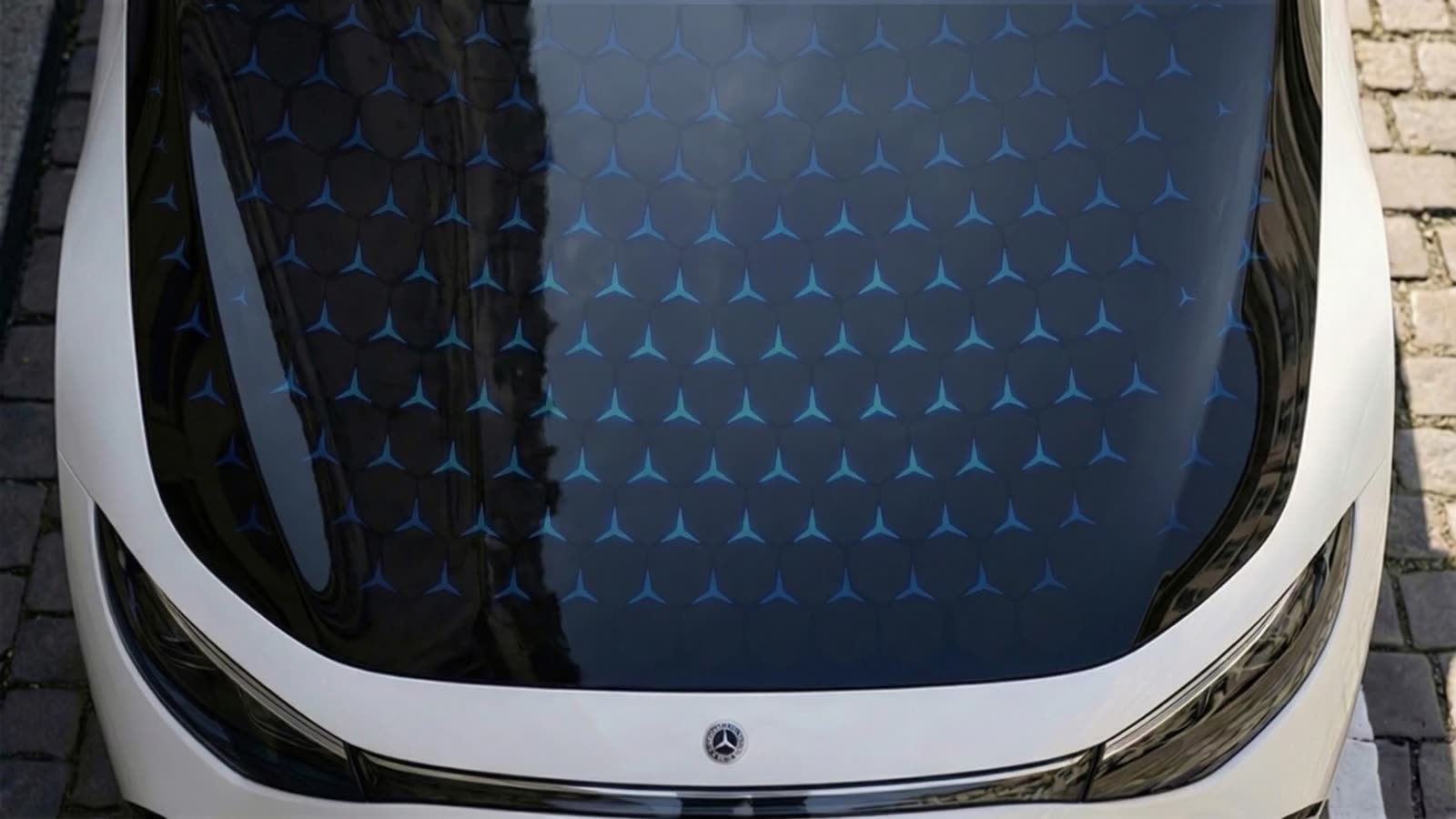
An energy-active surface inside the cabin.
- PV surface only
- No mechanical development
- Used within the vehicle, without exposure to the elements
TRL 3
Experimental proof-of-concept stage
TRL 7
Target potentially achievable within 12 months of development
TRL 8
To be defined after the successful prototype
Draft · subject to confirmation
Roller blind development
- PeriodJanuary – December 2027
- ScopeLevel 1 prototype of the energy-active roller blind · all tooling included
Testing programme (parallel)
- PeriodJanuary – December 2027
- ScopeDefinition of the testing protocol · verification of the defined protocol
Roller blind total · 2027
€174,000
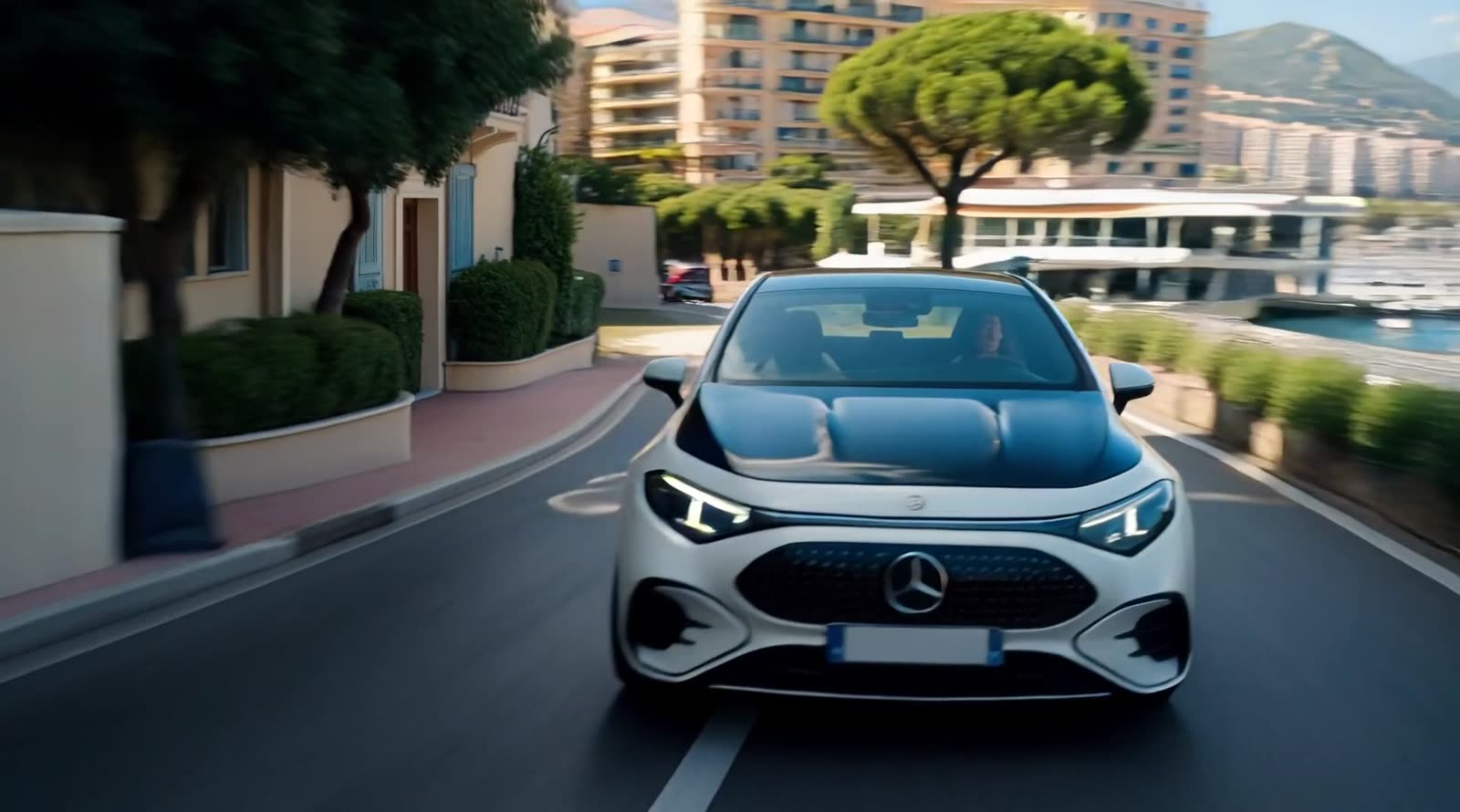
Concept visualisation
04 · APPEARANCE & COLOUR
Colour, texture, material
Developed with the Mercedes-Benz design team: from a surface where PV is almost invisible to deliberate graphic effects.
Concept visualisation · effect study
Visual appearance & colour development
CFM for VIPV, with Mercedes-Benz Design.
Development of CFM (colours, textures and materials) for VIPV in co-operation with the MB design team.
- 01Catalogue of materialsTouch and feel
- 02Catalogue of coloursPower efficiency vs. visual appearance
- 03Colour matching
- 04Available special effectsLogos, graphics, LED
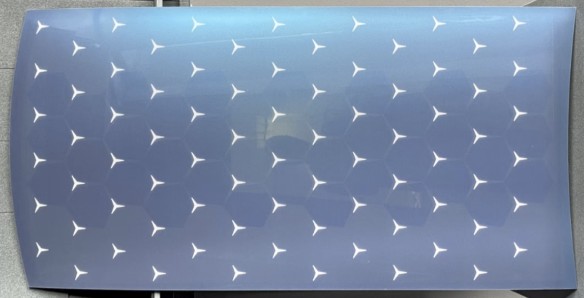
Learnings from current foil samples
- Colour quality (cloudiness) judged acceptable
- Colour-flip hue to be redirected towards the Mercedes-Benz palette
- Silicon cells are still visible
- Validation of the film is expected to take around two years
05 · Industrialisation · hood & tailgate
A pilot factory for 20,000 units a year.
Greenfield set-up in an existing building: development of low-volume mass-production tools and production lines.
- Line 1
Forming / cutting / inserting
- Line 2
Assembly
- Line 3
Laminating
- Line 4
Painting
Pilot capacity
20,000
units per year (hood & tailgate)
Project duration
18
months
Proposed Mercedes-Benz contribution
€4.5M
€4,500,000 for 20,000 units/a
Tools and production lines for the roller blind will differ significantly from hood and tailgate and cannot be reliably specified before completion of the Level 1 prototype. They are not included in this contribution.
Concept visualisation
Structural VIPV roadmap to mass production
24 months to SOP.
Month 1 = January 2027 · source plan, estimates
Timing milestones · to be aligned
- TRL 8 targetsHood within 18 months · tailgate within 20 months (if developed in parallel with the hood)
- Testing programmesComplete latest June 2029 (hood) and August 2029 (tailgate) — beyond the 24-month roadmap
- Mass production24 months total calendar time to reach mass production (SOP in month 24)
Budget summary · estimate
Total cost to reach mass production.
€6,678,000
Hood, tailgate, roller blind, appearance development and industrialisation.
- Budget 2027€3,311,333
- Budget 2028€3,366,667
Year allocation as stated in the source plan; phasing of the industrialisation contribution between years is not itemised.
| Workstream | Development | Testing | Total |
|---|---|---|---|
| Hood | 350,0002027 | 560,000380,000 (2027) · 180,000 (2028) | 910,000 |
| Tailgate | 380,0002027 | 450,000240,000 (2027) · 210,000 (2028) | 830,000 |
| Roller blindDraft · subject to confirmation | 120,0002027 | 54,0002027 | 174,000 |
| Appearance & colour development | 264,0002027 | — | 264,000 |
| Industrialisation, hood & tailgateProposed Mercedes-Benz contribution · 18 months | — | — | 4,500,000 |
| Total | 6,678,000 |
For discussion
From prototype to production, together.
- 01ScopeHood, tailgate, roller blind and appearance workstreams
- 02Budget 2027–2028€6,678,000 total estimate and its year allocation
- 03IndustrialisationPilot capacity definition and contribution terms
- 04TimingAlignment of TRL 8, testing and SOP milestones
Thank you.
Concept visualisation
Appendix A · quality control by process stage
Where each part is checked.
| Process stage | Visual | Dimensions | Bond strength | EL | IV | Functionality |
|---|---|---|---|---|---|---|
| 01Solar pre-laminate | — | — | ||||
| 02Rear plate preprocess | — | — | — | |||
| 03Rear plate forming | — | — | — | — | ||
| 04Front plate preprocess | — | — | — | |||
| 05Front plate forming | — | — | — | — | ||
| 063D laminating | — | — | — | — | ||
| 07Post-processing | — | — | — | |||
| 08Painting | — | — | — | — | — | |
| 09Assembly | — | — | — |
Appendix B · definitions and notes
Reading this proposal.
Technology readiness levels as used in this proposal
- TRL 3Experimental proof-of-concept stage
- TRL 5Current tailgate status, per Savcor assessment
- TRL 6Technology demonstrated in relevant environment with the prototype
- TRL 7System prototype demonstration in operational environment
- TRL 8System complete and qualified
- All costs are estimates in EUR and remain subject to confirmation. Year allocations are taken from the source plan.
- No PV power output, efficiency, weight or certification figures are stated in this proposal; none have been confirmed for the prototypes.
- Concept visualisations are illustrative. They do not represent an announced Mercedes-Benz product, an approved production programme or certified performance.
- Photographs marked as prototypes show actual parts and samples in their current state of development.
- Pilot capacity of 20,000 units per year refers to hood and tailgate as stated in the source plan; the unit definition is to be confirmed.
- The logistics set-up is a planning assumption.